
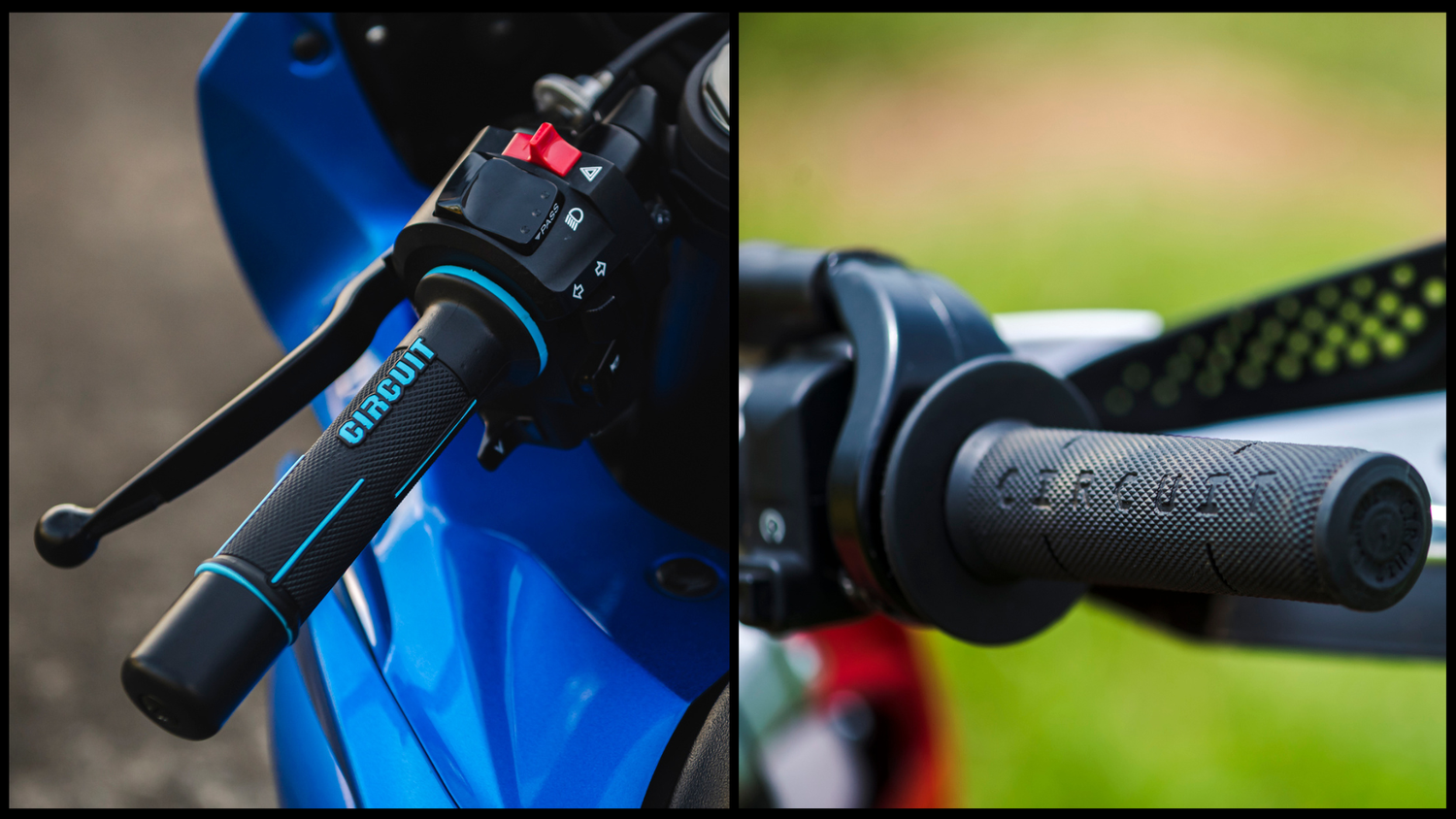
Chiunque guidi sa che il comfort e il controllo partono esattamente dal punto di maggiore contatto con la moto — le mani.
Eppure molti piloti sottovalutano l'importanza delle manopole.
Quando arriva il momento di sostituirle, di solito è il design ad attirare per primo l'attenzione. Ma nella guida reale, la mescola della gomma, la texture e persino lo spessore della manopola cambiano completamente la percezione della moto. A seconda della scelta, la moto può diventare più confortevole per il quotidiano, offrire maggiore fiducia sui percorsi tecnici o ridurre l'affaticamento delle mani durante le lunghe percorrenze.
Può sembrare un dettaglio secondario, ma la differenza si percepisce molto rapidamente — soprattutto per chi passa molto tempo in sella.
Quindi cosa cambia davvero tra le manopole off-road e quelle on-road?

Manopole Off-Road vs. On-Road: Cosa Cambia Davvero?
Anche quando appaiono visivamente simili, le manopole sono progettate per condizioni di guida completamente diverse.
Manopole Off-Road
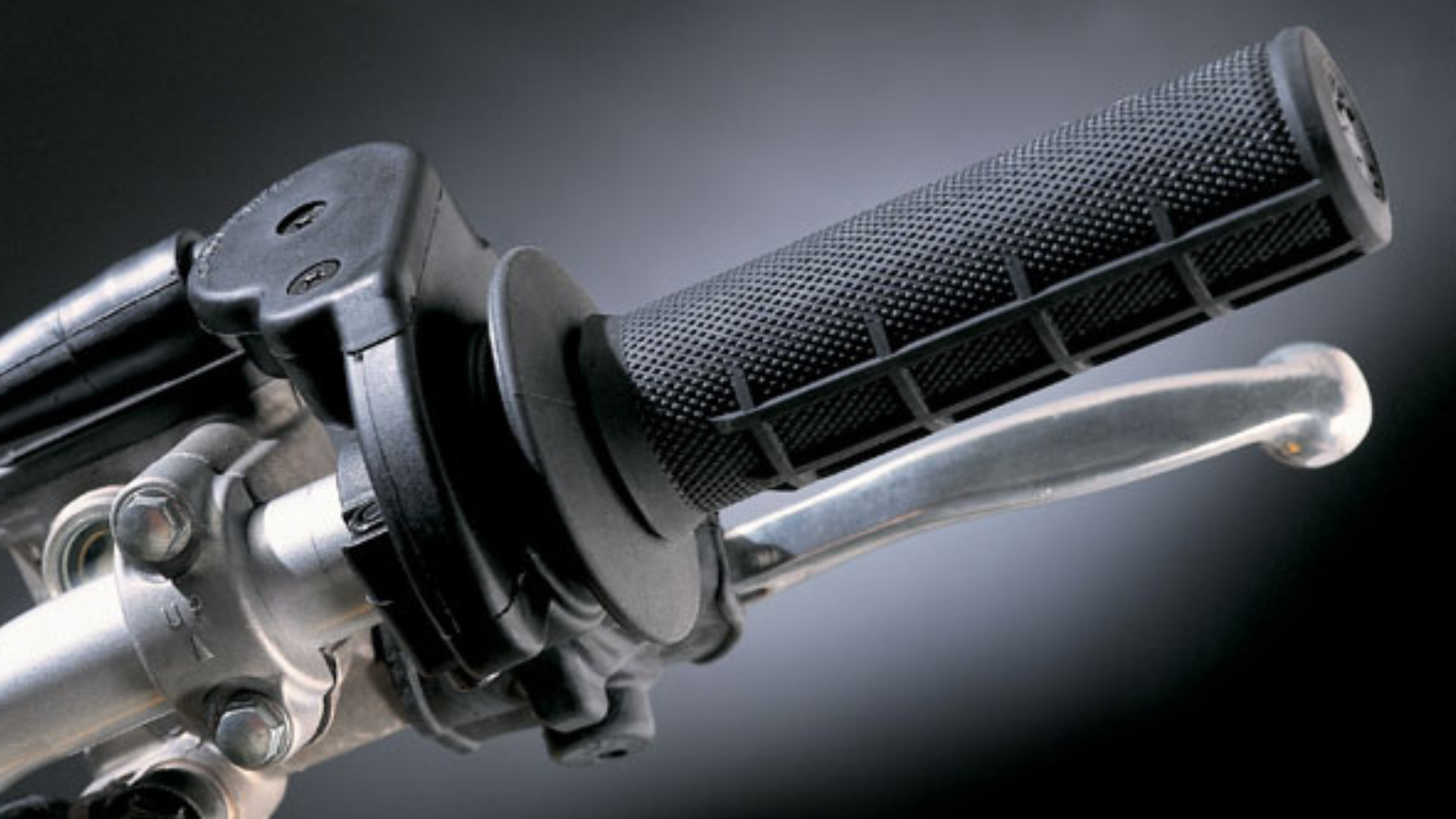
Nell'off-road, le esigenze sono completamente diverse. Sentieri, sassi, fango, impatti e vibrazioni costanti costringono il pilota a spostarsi e riposizionare le mani molto più spesso durante la guida. Per questo motivo, le manopole off-road sono generalmente progettate con la massima trazione e il controllo come priorità assolute.
Le manopole off-road si concentrano su:
- trame di presa più aggressive;
- mescole di gomma più morbide;
- migliore assorbimento delle vibrazioni;
- presa migliorata con i guanti;
- una sensazione più ferma sui terreni irregolari.
In pratica, questo aiuta a ridurre lo stress su mani e avambracci quando le sospensioni iniziano a cedere maggiormente nelle sezioni accidentate.
Un altro fattore importante è il feedback del manubrio. Molte manopole off-road offrono una connessione più diretta tra il pilota e la moto, elemento particolarmente importante nelle situazioni di guida tecnica.
Questi modelli sono progettati per motocross, enduro, trail riding e rally.
Per questo tipo di guida, modelli come Circuit III, Circuit IV, Circuit V, Cobra e Jupiter Racing offrono una sensazione più ferma e un controllo maggiore per gli stili di guida aggressivi.
Hai trovato la tua manopola? Visita il nostro sito web e scoprila:
https://www.circuitequipment.it/collections/handgrips
Manopole On-Road
Per la guida su strada e in autostrada, le priorità cambiano significativamente.
Qui il comfort e l'ergonomia diventano molto più importanti — soprattutto per chi trascorre molte ore nel traffico o percorre regolarmente lunghe distanze.
Le manopole on-road si concentrano su:
- miglioramento del comfort;
- riduzione delle vibrazioni;
- durabilità nel tempo;
- ergonomia per sessioni di guida prolungate.
E questo fa una differenza notevole nella guida quotidiana. A seconda della moto — in particolare scooter, moto da commuting e naked bike — le vibrazioni del manubrio possono causare un significativo affaticamento delle mani nel tempo. Una manopola più orientata al comfort aiuta a minimizzare questo affaticamento durante le uscite più lunghe.
È esattamente per questo che è nata la linea Circuit Equipment Everyday.
Le applicazioni consigliate includono:
- scooter — Classic, Silverstone, Interlagos Bicomp;

- moto stradali — Interlagos, Barcelona, Supersoft, Silverstone;
- naked bike — Silverstone, Storm, Speed;
- moto da turismo — Interlagos, Barcelona, Revolution II, Supersoft;

- moto di media cilindrata — Silverstone, Interlagos e Barcelona.
Anche lo Spessore e la Texture della Manopola Cambiano la Percezione di Guida
Molti piloti si concentrano solo sul design della manopola, ma spessore e texture hanno un impatto enorme sulla sensazione di guida.
Le manopole più sottili trasmettono generalmente un feedback maggiore dal manubrio e offrono una risposta più pronta al gas e allo sterzo. Questo è particolarmente apprezzato dai piloti che cercano un setup più tecnico o orientato alle prestazioni nella guida off-road.
Le manopole più spesse, al contrario, aiutano ad assorbire le vibrazioni e riducono generalmente l'affaticamento delle mani durante il commuting o le percorrenze lunghe.
Anche la texture cambia considerevolmente l'esperienza di guida. Le trame più aggressive aumentano la trazione e la sicurezza della presa, soprattutto indossando i guanti o in condizioni bagnate e fangose. Le trame più morbide privilegiano generalmente il comfort per la guida urbana.
In fondo, non esiste la manopola "migliore" in assoluto — esiste solo quella che si adatta meglio al tuo stile di guida.
Everyday vs. Racing: Stesso Design, Tecnologie Circuit Diverse
Questa è una delle domande più frequenti tra i piloti.
Alcune manopole Circuit condividono lo stesso design visivo ma utilizzano tecnologie completamente diverse nelle versioni Everyday e Racing. Anche quando appaiono quasi identiche, la mescola del materiale, il livello di grip e la destinazione d'uso cambiano significativamente.
Versione Everyday: Comfort e Durabilità per la Guida Quotidiana
La linea Everyday è stata sviluppata per i piloti che usano la moto tutti i giorni e percorrono anche l'autostrada. L'attenzione è sul comfort a lungo termine, con un'ergonomia pensata per la guida continuativa, un buon assorbimento delle vibrazioni e una maggiore durabilità contro la costante esposizione a sole e intemperie grazie alla protezione UV.
Nella guida reale, questo si traduce in un'esperienza meno affaticante, specialmente durante il commuting urbano, il traffico intenso e le percorrenze lunghe. La mescola a base di PVC contribuisce ad attenuare parte delle vibrazioni trasmesse dal manubrio, creando una sensazione complessiva più fluida.

Versione Racing: Più Grip e Risposta Più Pronta
La linea Racing è costruita per i piloti che vogliono una sensazione di guida più aggressiva, con maggiore controllo e una risposta più pronta dal manubrio. La mescola in TPE è progettata per le prestazioni e la trazione, offrendo una presa più ferma e un feedback più diretto dalla moto.
Questo fa una grande differenza nel motocross, nell'enduro e nella guida off-road impegnativa, dove la precisione e la costanza della presa contano di più.
Rispetto alle manopole orientate al comfort, la sensazione è volutamente più rigida per privilegiare il controllo, la prontezza di risposta e il feedback del pilota in condizioni di guida aggressive.

Quale Manopola Circuit è Giusta per il Tuo Stile di Guida?
Ora che conosci le differenze tra le linee di prodotto, scegliere la manopola giusta diventa molto più semplice.
Se la tua priorità è il comfort, la riduzione delle vibrazioni e una guida quotidiana più fluida, la linea Everyday è generalmente la scelta più indicata.
Se cerchi più grip, una risposta più pronta e il massimo controllo durante una guida aggressiva, la linea Racing offre una sensazione molto più orientata alle prestazioni.
In fondo, la manopola giusta è quella che rende la tua esperienza di guida più confortevole, più sicura e più connessa alla moto.
Quindi — quale manopola Circuit si adatta meglio al tuo stile di guida?
Domande Frequenti sulle Manopole Moto
Come scelgo le manopole giuste per la moto?
La scelta delle manopole dipende dal tuo stile di guida, dal tipo di moto e dalle preferenze di comfort. Per la guida stradale e le lunghe percorrenze, si consigliano manopole morbide ed ergonomiche. Per il motocross e la guida off-road, sono ideali le manopole con trazione e controllo potenziati.
Qual è la differenza tra manopole morbide e dure?
Le manopole morbide assorbono meglio le vibrazioni del manubrio, migliorando il comfort e riducendo l'affaticamento del pilota. Le manopole dure offrono generalmente una maggiore durabilità e una sensazione di guida più ferma, rendendole popolari per la guida aggressiva e l'off-road.
Le manopole moto riducono le vibrazioni del manubrio?
Sì. Le manopole di qualità contribuiscono ad assorbire parte delle vibrazioni trasmesse dal manubrio, offrendo una guida più confortevole e riducendo lo sforzo sulle mani.
Quali sono le migliori manopole per motocross e trail riding?
Le migliori manopole per motocross e trail riding sono i modelli con un'ottima trama, durabilità e controllo. Le manopole bi-composto e lock-on sono scelte popolari tra i piloti off-road per la loro stabilità e prestazioni.
Le manopole moto universali sono compatibili con tutte le moto?
Molte manopole sono progettate con dimensioni universali per moto stradali, off-road e adventure. Tuttavia, è importante verificare il diametro interno e la lunghezza della manopola prima dell'installazione per garantire la compatibilità.
Quando devo sostituire le manopole della moto?
Le manopole vanno sostituite quando mostrano segni di usura, crepe, riduzione della presa o disagio durante la guida. Le manopole usurate possono influire negativamente sul controllo e sulla sicurezza della guida.
Le manopole lock-on valgono l'investimento?
Sì. Le manopole lock-on offrono un'installazione rapida e un fissaggio sicuro senza bisogno di colla o filo di sicurezza. Sono molto apprezzate dai piloti che cercano praticità, stabilità e prestazioni affidabili.
Perché la trazione è importante nelle manopole moto?
La trazione influisce direttamente sul controllo della moto, soprattutto in condizioni di guida bagnate, fangose o con le mani sudate. Una manopola di alta qualità migliora la maneggevolezza, la fiducia del pilota e la sicurezza complessiva.


Commenta
Questo sito è protetto da hCaptcha e applica le Norme sulla privacy e i Termini di servizio di hCaptcha.